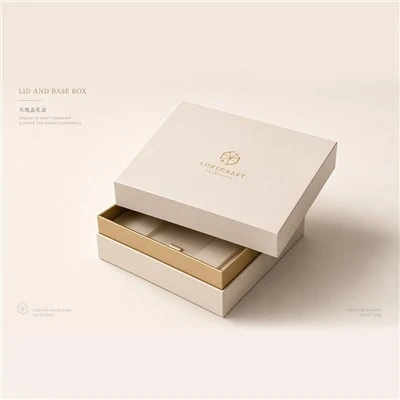
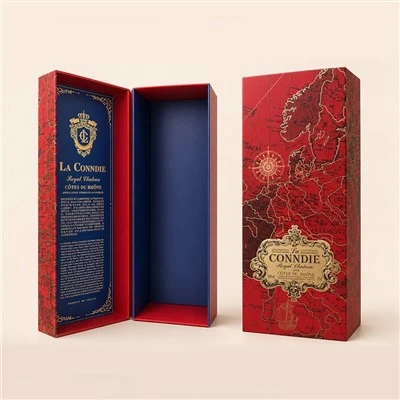
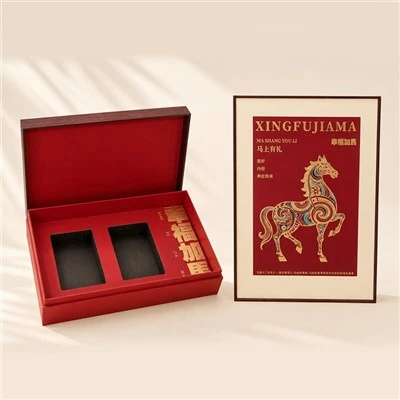
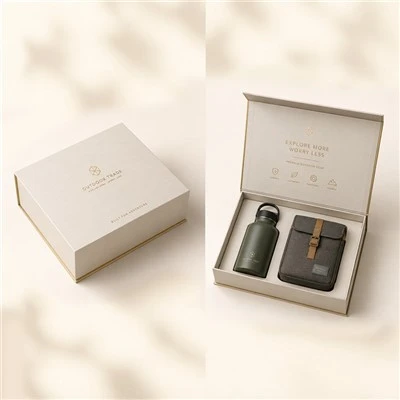
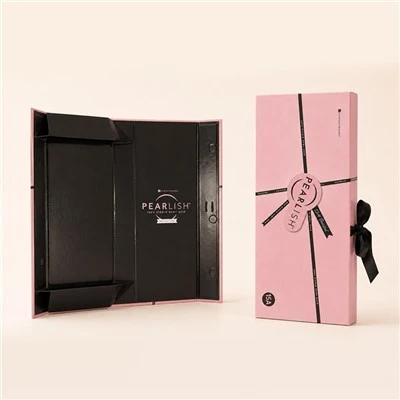
The lid-and-base box is a classic packaging structure formed by fitting a separate lid (the "heaven" or top) onto a base (the "earth" or bottom). This design has evolved into a wide range of specific variations; common classifications include:
Classification by Basic Structure
Full-coverage lid-and-base box: The lid completely covers the base. With a clean, elegant look, this is the most widely used standard style, suitable for various types of conventional gift packaging.
Partial-coverage lid-and-base box:The lid covers only the upper section of the base rather than the entire box. This design offers smoother opening and closing and a more stylish appearance, making it a popular upgraded option.
Flanged lid-and-base box:A flange or rim is added to the exterior of the base. This secures the lid for greater structural stability while the exposed rim serves a decorative purpose, making it ideal for high-end product packaging.
Classification by Closure Method
Magnetic lid-and-base box: Magnets embedded in the box structure allow for automatic closure and a smooth opening experience. Costs are 30%–50% higher than standard versions, so they are frequently used for high-value gift packaging.
Tab-lock lid-and-base box: Secured using a cardboard tab insert. This design is simple and cost-effective, making it suitable for mass-produced packaging for electronic products.
Snap-lock lid-and-base box: Features an extended locking mechanism on the box body. It balances structural security with cost-efficiency and is commonly found in packaging for medical devices.