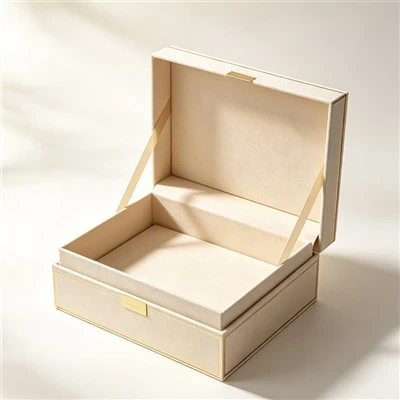
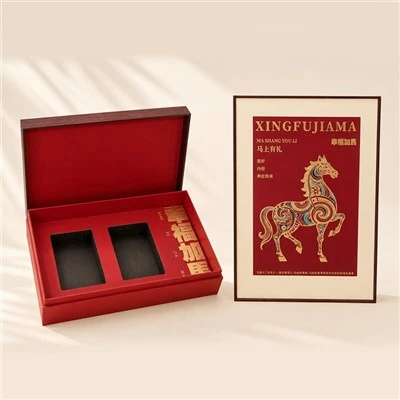
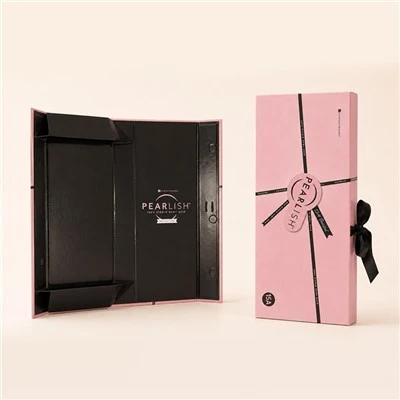
The core of the lid-and-base box style is a split, nested structure; it relies on the precision fit between the top lid and the bottom base to facilitate opening, closing, and securing, rather than depending on complex mechanical mechanisms.
Basic Structural Principles
It consists of two independent components: the "lid" (top) and the "base" (bottom). The lid is slightly larger than the base, with the clearance between them precisely controlled at 0.3–0.5 mm. A snug, seamless closure is achieved through the nesting fit, ensuring structural stability without the need for additional fasteners.
Formation and Usage Logic
The finished box is formed by wrapping rigid greyboard with a facing paper and bonding it in place; pre-cut V-groove creases ensure crisp, sharp edges. To use, the lid is simply placed vertically over the base to seal the box. The opening and closing actions are smooth and effortless, while the structure provides stable protection and support for the contents.
Principles of Structural Variations
Different variations of the lid-and-base style modify these basic principles-such as the "base-wraps-lid" design (where the lid sits recessed within the base) or the "exposed-waist" style (which leaves a 5–10 mm gap between the lid and base). These variations achieve distinct functional and display effects by adjusting the nesting depth.