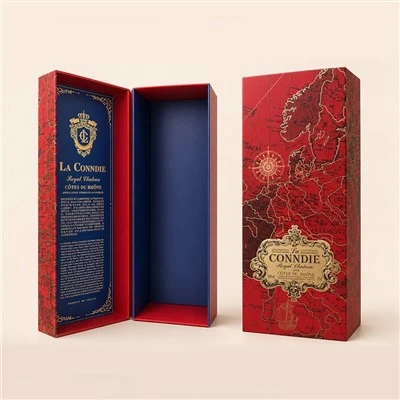
The lid-and-base box is a classic packaging structure defined by the following core characteristics:
Basic Structure
It consists of two separate components-the "lid" (top cover) and the "base" (bottom tray). The two parts fit together precisely; the lid's dimensions are slightly larger than the base's, ensuring a snug, seamless closure.
Core Specifications
The clearance between the lid and the base is typically controlled within 0.3–0.5 mm, with standard wall thicknesses ranging from 1.5 to 3 mm. Compressive strength can be enhanced by increasing the thickness of the greyboard; the style is ideal for products with regular shapes.
Performance Advantages
The structure is rigid and stable, offering excellent load-bearing and protective capabilities. Upon opening, the contents are highly visible, creating a sense of ceremony that makes it suitable for various display scenarios.
Design Versatility
It allows for numerous variations-such as full-depth lids, shallow lids, exposed-waist designs, irregular shapes, and transparent acrylic lids. Compatible with materials like paper, wood, and acrylic, it meets customization needs across a wide range of industries.